

SCL Support Services
In-Home Support
Help at home, on your terms.
In-home support is practical help with everyday life in the place you know best. It can include personal care, household tasks, meal preparation, routines and support to build skills over time.
The level of help should reflect what you actually want and need. Sometimes that means doing something together. Sometimes it means stepping in. Sometimes it means helping you practise until you can do more of it yourself.
What this support can include
Support shaped around real life.
Personal care
Respectful support with personal routines where assistance is part of your support needs.
Daily living
Practical help with meals, routines, organising the day and the everyday tasks that keep life moving.
Household tasks
Support with ordinary household activities in a way that respects how you like your home to run.
Building skills
Work on doing more for yourself where that is something you want to build towards.
Independence
Help should build independence, not replace it.
We can do things with you, support you to learn them, or step in where assistance is genuinely needed. The right balance depends on you, the task and what you are working towards.
In everyday life
What in-home support can look like
Often it is deliberately ordinary. Good support should fit into home life rather than make home life revolve around the support.
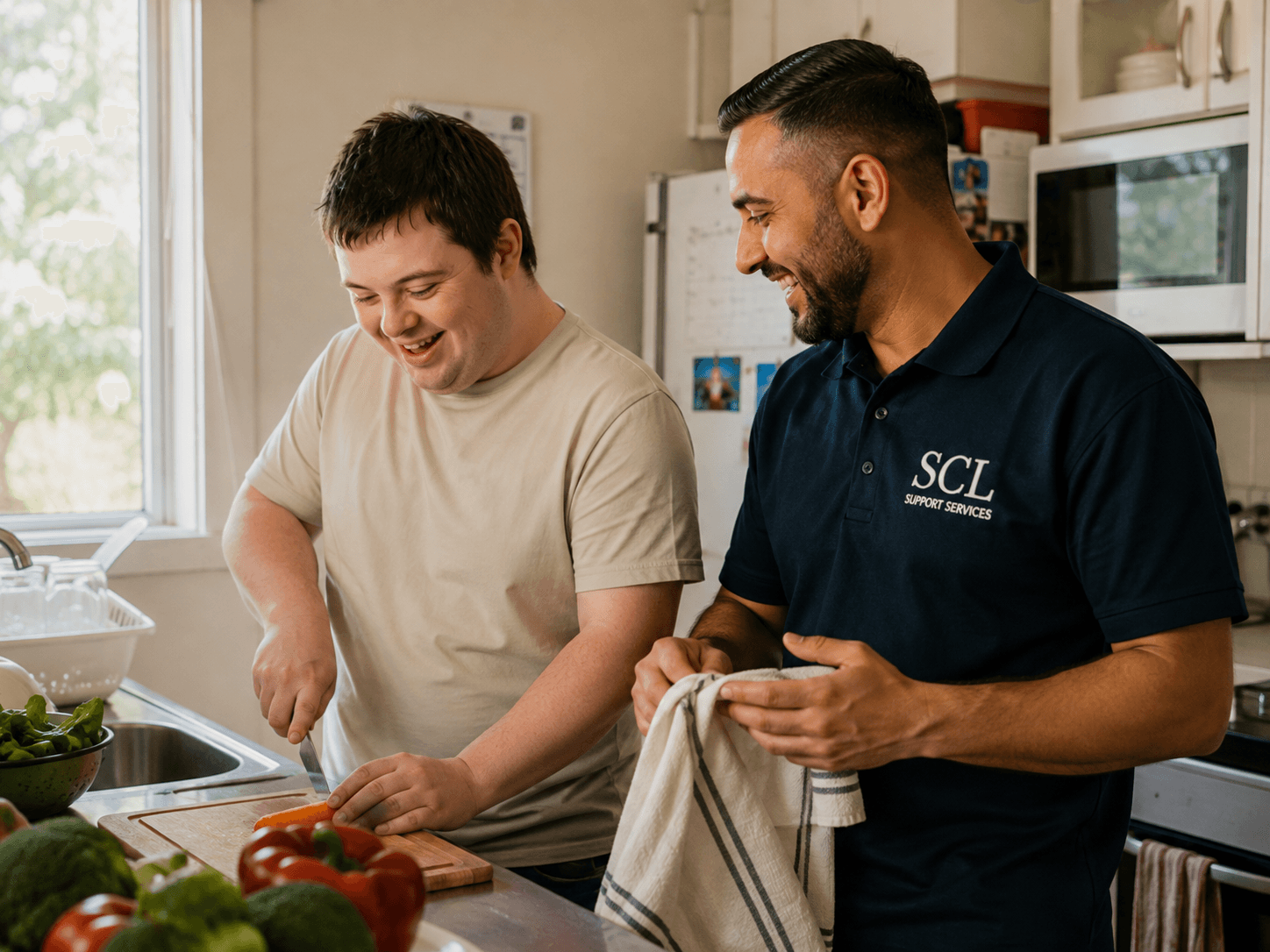
- ✓Preparing meals together
- ✓Personal care and morning routines
- ✓Laundry and household tasks
- ✓Shopping and planning for the week
- ✓Organising appointments and daily routines
- ✓Practising skills you want to do more independently
Our approach
Your routines come first.
We start by asking how you like things done, what you want help with and what you would rather keep doing yourself. Workers support the plan, but they also listen to you in the moment because home life does not always follow a script.
Getting started
Three steps, explained clearly.
- 01
Tell us where help would make a difference
We talk about your routines, what is already working and the parts of daily life where support would be useful.
- 02
Agree how support should be delivered
We work through your preferences, timing, communication and what you want to keep doing independently.
- 03
Match support and keep reviewing it
We introduce workers who fit the support and adjust the arrangement as your routine, goals or needs change.
Local in-home support
In-home disability support in Coffs Harbour and the Mid North Coast.
In-home support should fit around the participant’s real routines, preferences and goals. SCL can assist with personal care, daily living, household tasks and skill building while keeping choice, dignity and independence at the centre of the arrangement.
Coffs Coast
NDIS in-home support in Coffs Harbour
Coffs Harbour is SCL’s home base. In-home disability support is available across the Coffs Coast subject to the participant’s needs, preferred times and current team capacity.
View Coffs Harbour support →Nambucca Valley
In-home support in Nambucca Heads & Macksville
SCL has a growing service footprint in Nambucca Heads and Macksville. We confirm the required support times, worker fit and current local capacity before starting services.
View Nambucca & Macksville support →Support at home
Practical help without taking over.
Good in-home support can look very ordinary. The important part is getting the balance right between assistance, choice and building confidence with everyday life.
Personal routines
Respectful assistance with personal care and morning or evening routines where support is required.
Meals and daily living
Help with meal preparation, organising the day, appointments and the routines that keep everyday life moving.
Household assistance
Support with laundry and ordinary household tasks in a way that respects how the participant wants their home to run.
Building independence
Doing tasks together, practising skills and adjusting the level of assistance as confidence and capability grow.
Frequently asked questions
In-Home Support with SCL.
Does SCL provide in-home disability support in Coffs Harbour?
Yes. SCL provides in-home support across the Coffs Coast, including practical assistance with personal care, daily living, household routines and building skills for greater independence.
What can NDIS in-home support include?
Depending on the participant’s goals and support needs, in-home support can include personal care, meal preparation, household tasks, daily routines, organising appointments and support to practise everyday skills.
Can SCL provide in-home support in Nambucca Heads or Macksville?
Yes. SCL has a growing service footprint in Nambucca Heads and Macksville. Tell us the participant’s location, support needs and preferred times so we can confirm current local capacity and suitability.
Will support workers take over tasks I can do myself?
The aim is to provide the level of help the participant actually wants and needs. That can mean doing a task together, stepping in where assistance is required, or supporting the person to practise skills and do more independently over time.
How does SCL arrange in-home support?
We start with the participant’s routines, preferences, communication, goals, location and preferred support times. We then confirm capacity, discuss worker matching and agree how the support should be delivered and reviewed.
Ready to talk about support?
You do not need to know exactly which service fits. Tell us what is happening and what you are looking for, and we will tell you honestly whether SCL can help.