

SCL Support Services
Complex & High-Intensity Support
Clinical confidence, human warmth.
Some support needs require specific training, clear clinical instructions and workers who are competent in the task before they provide it. That can include complex personal care and high intensity supports delivered at home or in the community.
The clinical requirements matter, but so does the person receiving the support. We aim to deliver complex support calmly, respectfully and in a way that fits ordinary life rather than making home feel like a clinical environment.
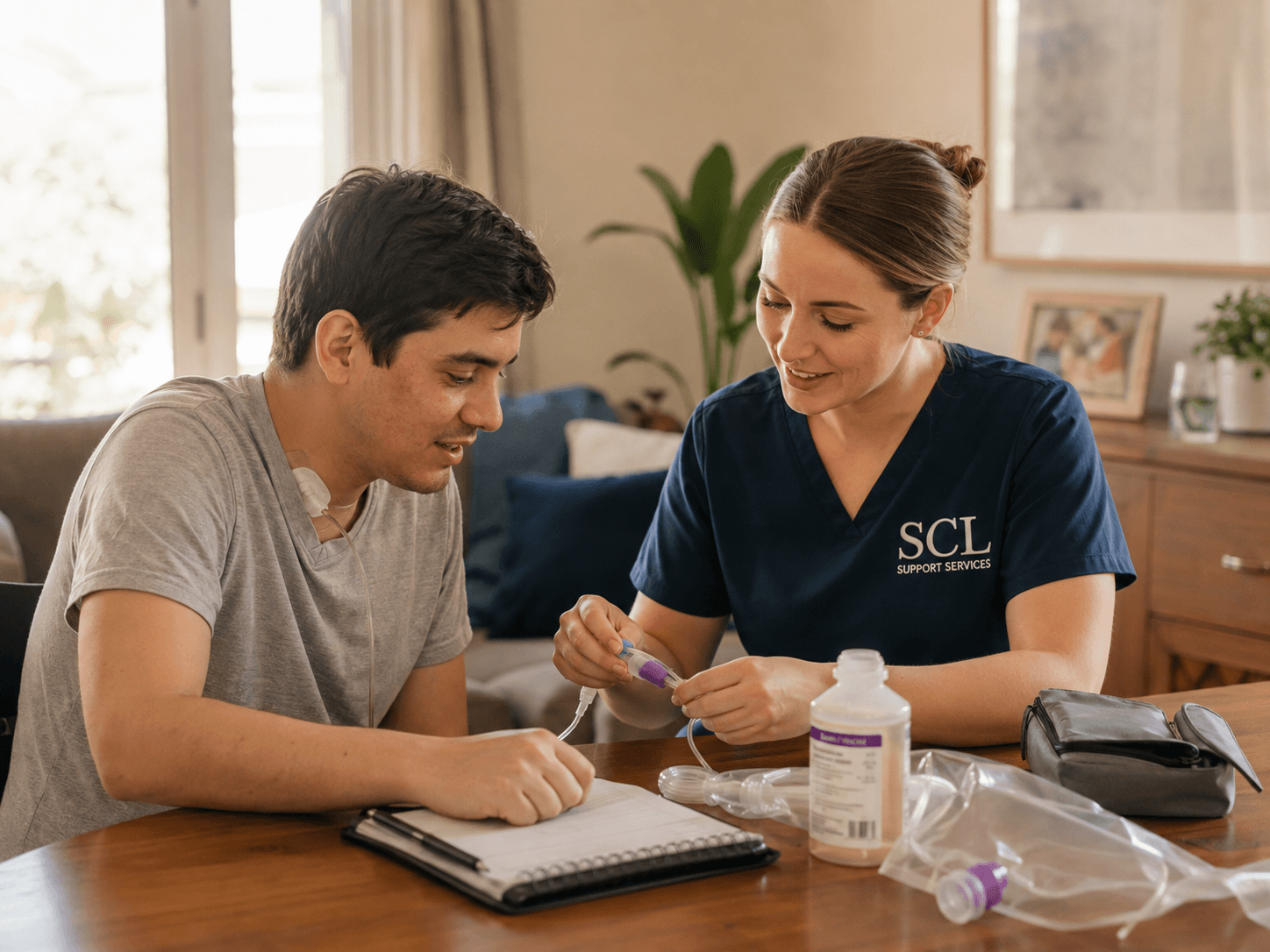
What this support can include
Support shaped around real life.
High intensity support
Support for complex tasks where specific training, instructions and competency are required.
Health related routines
Support with agreed health related tasks as part of a participant support arrangement.
Worker capability
The right worker needs the right training and information before undertaking complex support.
Clinical oversight
Clinical input and oversight are used where the support requires it rather than relying on guesswork.
Confidence at home
Clinical confidence without making home feel clinical.
Complex support can require specific skills, training and clinical oversight. It should still be delivered calmly and respectfully in the place you call home, with your preferences and dignity kept in view.
In everyday life
What complex support may involve
The exact support depends on the participant, their plans and what SCL can safely provide. We confirm the requirements before support begins.
- ✓Enteral feeding support
- ✓Dysphagia related support
- ✓Diabetes support
- ✓Seizure related support
- ✓Catheter or bowel care
- ✓Complex personal care routines
Our approach
Safe support starts before the shift.
Before complex support begins, we need to understand the participant, the relevant instructions and what worker capability is required. We do not treat high intensity support as something a worker should simply work out on the day.
Getting started
Three steps, explained clearly.
- 01
Understand the support requirements
We talk with you and the relevant people in your support network about what assistance is required and what information is needed.
- 02
Confirm plans, training and capability
We make sure the relevant instructions are available and the workers providing the support are appropriately prepared.
- 03
Start carefully and keep reviewing
Support begins once the arrangement is ready, with changes addressed as needs, plans or clinical directions change.
Local complex support
Complex and high-intensity support in Coffs Harbour and the Mid North Coast.
Complex support needs more than an available worker. The participant's plans, instructions, required competencies, staffing and clinical oversight all need to be understood before support begins. SCL works through those requirements while keeping the person, their routines and their home life at the centre of the arrangement.
Coffs Coast
Complex disability support in Coffs Harbour
Coffs Harbour is SCL's home base. We can discuss complex personal care and high-intensity support across the Coffs Coast based on the participant's requirements and current capacity.
View Coffs Harbour support →Nambucca Valley
Complex support enquiries in Nambucca Heads & Macksville
SCL has a growing service footprint in Nambucca Heads and Macksville. We confirm the support requirements, local worker capability and staffing before accepting a complex support arrangement.
View Nambucca & Macksville support →Before support starts
Capability has to be established first.
High-intensity tasks should not be improvised on shift. We work through the participant-specific information, worker preparation and oversight required for safe delivery before confirming the arrangement.
Participant-specific plans
Relevant plans, instructions and support requirements need to be current, clear and available to the people delivering the support.
Worker training
Workers need the training and task-specific preparation required for the support they are expected to provide.
Competency
Training alone is not the same as competency. The worker must be ready to perform the required support safely and consistently.
Clinical oversight
Where clinical input or oversight is required, it forms part of the support arrangement rather than being treated as an afterthought.
Frequently asked questions
Complex & High-Intensity Support with SCL.
Does SCL provide complex and high-intensity disability support in Coffs Harbour?
Yes. SCL provides complex and high-intensity support on the Coffs Coast where the participant's needs, relevant plans, worker training and competency, and any required clinical oversight can be safely put in place.
What can complex or high-intensity support include?
Depending on the participant and the relevant plans, support may include enteral feeding and dysphagia support, diabetes and seizure support, catheter or bowel care, complex personal care routines and other agreed health-related support.
How does SCL prepare workers for high-intensity support?
We confirm the participant's support requirements, relevant instructions, worker training and competency before the support begins. Clinical input and oversight are used where the support requires it.
Can SCL discuss complex support in Nambucca Heads or Macksville?
Yes. SCL can discuss complex and high-intensity support enquiries from Nambucca Heads, Macksville and nearby communities. Local availability depends on the participant's requirements, the worker capability needed and current staffing capacity.
Can complex support be provided at home or in a SIL arrangement?
Complex support can form part of an in-home or Supported Independent Living arrangement where the participant's support requirements, relevant plans, staffing, worker competency and clinical oversight can be safely established.
Ready to talk about support?
You do not need to know exactly which service fits. Tell us what is happening and what you are looking for, and we will tell you honestly whether SCL can help.